☕ Decaf Coffee: The Calm Cup with a Surprising Story
For most of us coffee lovers, that first cup of the day feels almost sacred. That heavenly aroma, the warm cup in our hands, and the familiar comfort that quietly says, “Welcome to a new day.”
But for some, caffeine can bring more than energy...it can bring jitters, racing thoughts, or sleepless nights.
Enter decaf coffee...the gentler sibling of your morning brew. Some people call it an oxymoron (“What’s the point?” they say), but there’s actually a fascinating history and a bit of cool science behind that mellow cup of joe.
☕ A Soggy Shipment and a Spark of Curiosity
Believe it or not, decaf coffee was discovered completely by accident...over a century ago!
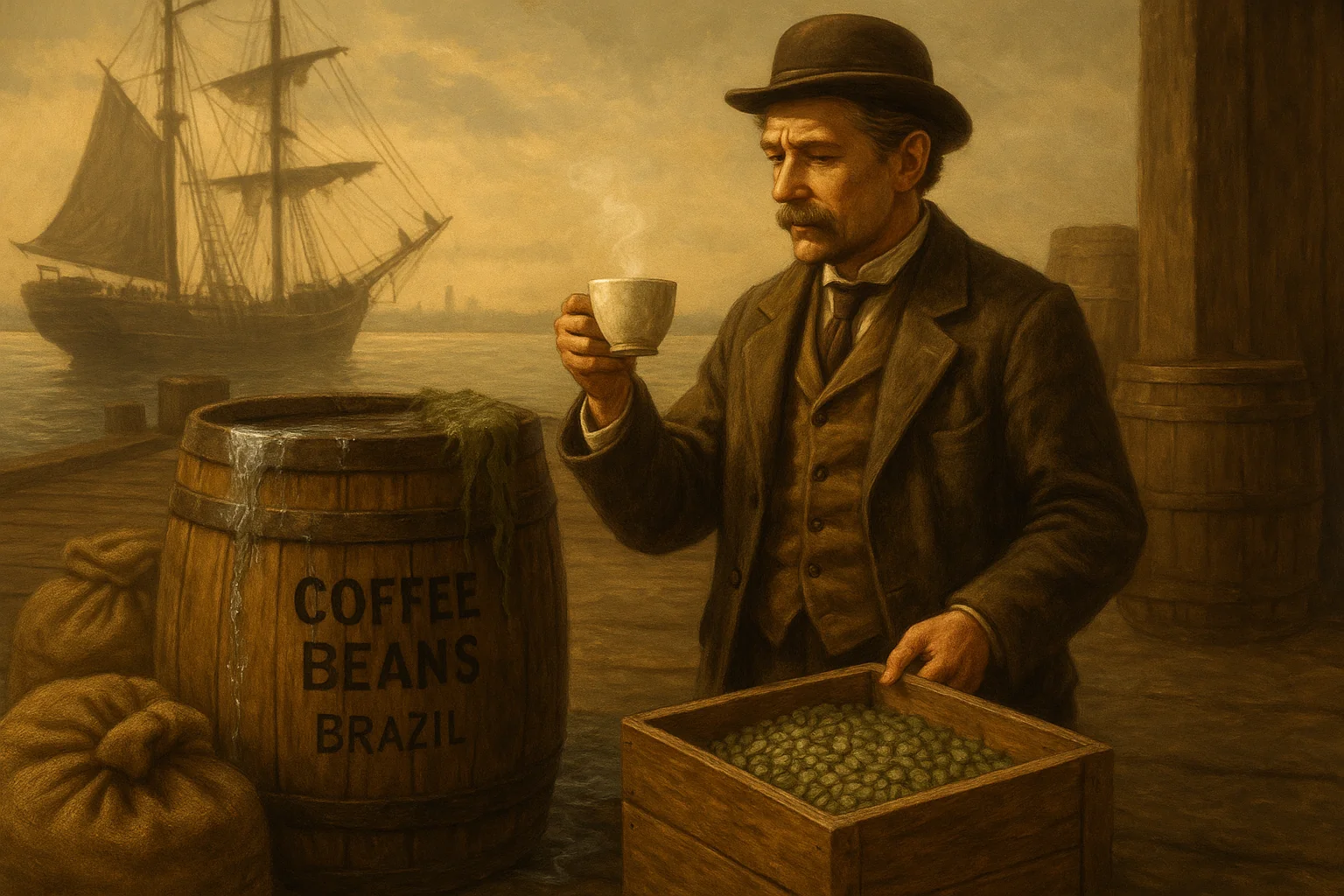
Back in 1905, a German coffee merchant named Ludwig Roselius received a shipment of green coffee beans that had been soaked in seawater during transport.
When the beans arrived, he thought the batch was ruined...salty, soggy, and probably unsellable.
But when he roasted and tasted them out of curiosity and in hopes of saving his expensive shipment, he noticed something surprising: the coffee flavor was still there…but the caffeine kick was gone!
Roselius realized that somehow, the saltwater had drawn out much of the caffeine without destroying the taste. He was fascinated and maybe a little relieved that his “ruined” batch wasn’t a total loss. So he got to work figuring out how to do it on purpose.
Within a few years, he developed and patented the first commercial decaffeination process, which used a solvent called benzene, which is now banned for safety reasons.
He launched his decaf coffee under the brand Kaffee HAG (short for Kaffee Handels-Aktien-Gesellschaft)...best known in the U.S. as Sanka Coffee.
That’s right, Sanka was the world’s first decaf brand, born from a shipping accident!
🔬 How Coffee Loses Its Buzz (Without Getting Too Technical or Sciencey)
Every decaf journey begins with green coffee beans...the unroasted kind still packed with caffeine and flavor compounds.
The challenge? Removing the caffeine without stealing the taste.
Over the past century, coffee producers have gotten pretty clever about how to do that. Most methods follow the same basic idea: loosen the caffeine, coax it out, and keep as much of the flavor as possible.
Here are the three (3) main ways they pull off this balancing act:
☕ 1. The Solvent Method – The Reliable Workhorse
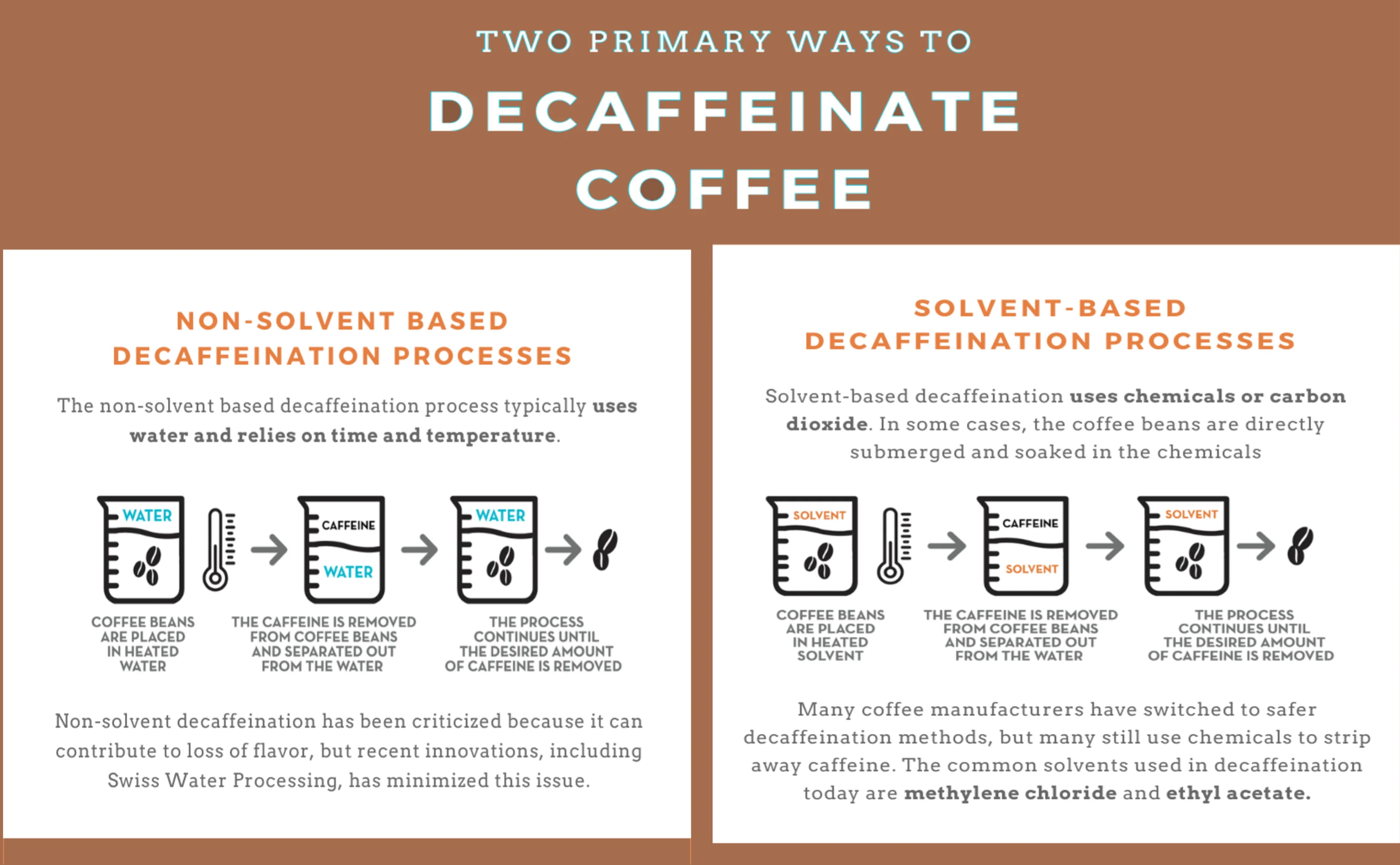
This is the classic, time-tested approach used for decades. The beans are first soaked or steamed to open their pores, then treated with a food-safe solvent such as methylene chloride, which gently bonds with caffeine molecules and carries them away.
Once the caffeine is gone, the beans are thoroughly rinsed, dried, and roasted, leaving behind a smooth, flavorful cup without a trace of chemical taste.
The FDA strictly regulates this process, and any leftover solvent after roasting must be below extremely tiny, safe limits (and it always is). Think of it as the reliable, everyday method that keeps most of the world’s decaf supply humming along.
💧 2. The Swiss Water® Process – The Natural Purist
This one’s for those who like things simple and clean. No chemicals, no shortcuts...just pure water, time, and carbon filters. The beans soak in hot water, which draws out caffeine and flavor compounds. That water is then passed through a special filter that traps caffeine but lets the flavor-rich compounds flow back to the beans.
It’s slow, patient work, but the result is a decaf coffee that keeps its character and complexity intact. It’s especially popular with organic roasters and coffee drinkers who prefer a chemical-free option.
🌬️ 3. The CO₂ Method – The Space-Age Science Experiment
If the Swiss Water® process is old-school, this one’s straight out of a lab. Using pressurized carbon dioxide, caffeine molecules are gently drawn out of the beans while flavor oils and aromatic compounds stay behind. When the pressure is released, the CO₂ evaporates, taking the caffeine with it.
It’s incredibly efficient, environmentally friendly, and preserves taste beautifully, but because it requires high-tech equipment, it’s usually reserved for premium beans or large-scale commercial roasting.
🌿 4.The New Natural Method - The Sugarcane (Ethyl Acetate) Method
The newest kid on the block takes a sweet approach...literally. This process uses ethyl acetate derived from sugarcane or fruits to remove caffeine naturally. The beans are first steamed to open up, then soaked in the EA solution, which bonds to caffeine molecules and lifts them out.
Because ethyl acetate occurs naturally in many plants, this method is often marketed as “naturally decaffeinated.” It imparts a gentle sweetness to the cup and has quickly become a favorite in regions where sustainability and local sourcing matter.
No matter how the caffeine is extracted from the beans, the beans are then dried, roasted, and brewed just like any other coffee, giving you a rich, satisfying cup of coffee with only 2–5 mg of caffeine instead of 70–140 mg.
⚖️ Pros & Cons of Going Decaf
Now that we’ve discovered how coffee loses its buzz, let’s look at what you gain (and what you might give up) when you reach for decaf instead of the regular roast.
✅ Pros

0 Comments
Join the conversation
Be the first to comment
Share your thoughts above.