Embrace the Warmth of December with A
Brew-tiful Month of Coffee Traditions!
December has a way of turning an ordinary cup of coffee into something almost enchanted. Maybe it is the glow of the lights. Maybe it is the hush of winter mornings. Or maybe it is simply that this is the time of year when a warm mug becomes a ritual instead of a routine. And coffee becomes the connection for families and friends to gather in celebration of the season.
What many people never realize is that around the world, December holidays are steeped in coffee traditions. Some are tied to centuries-old feast days. Some grew out of cultural customs. Others are simply cozy rituals shared among loved ones when the nights are long and the air begs for warmth.
Let's walk through the holiday season in order and discover how different cultures celebrate with a coffee mug in hand.
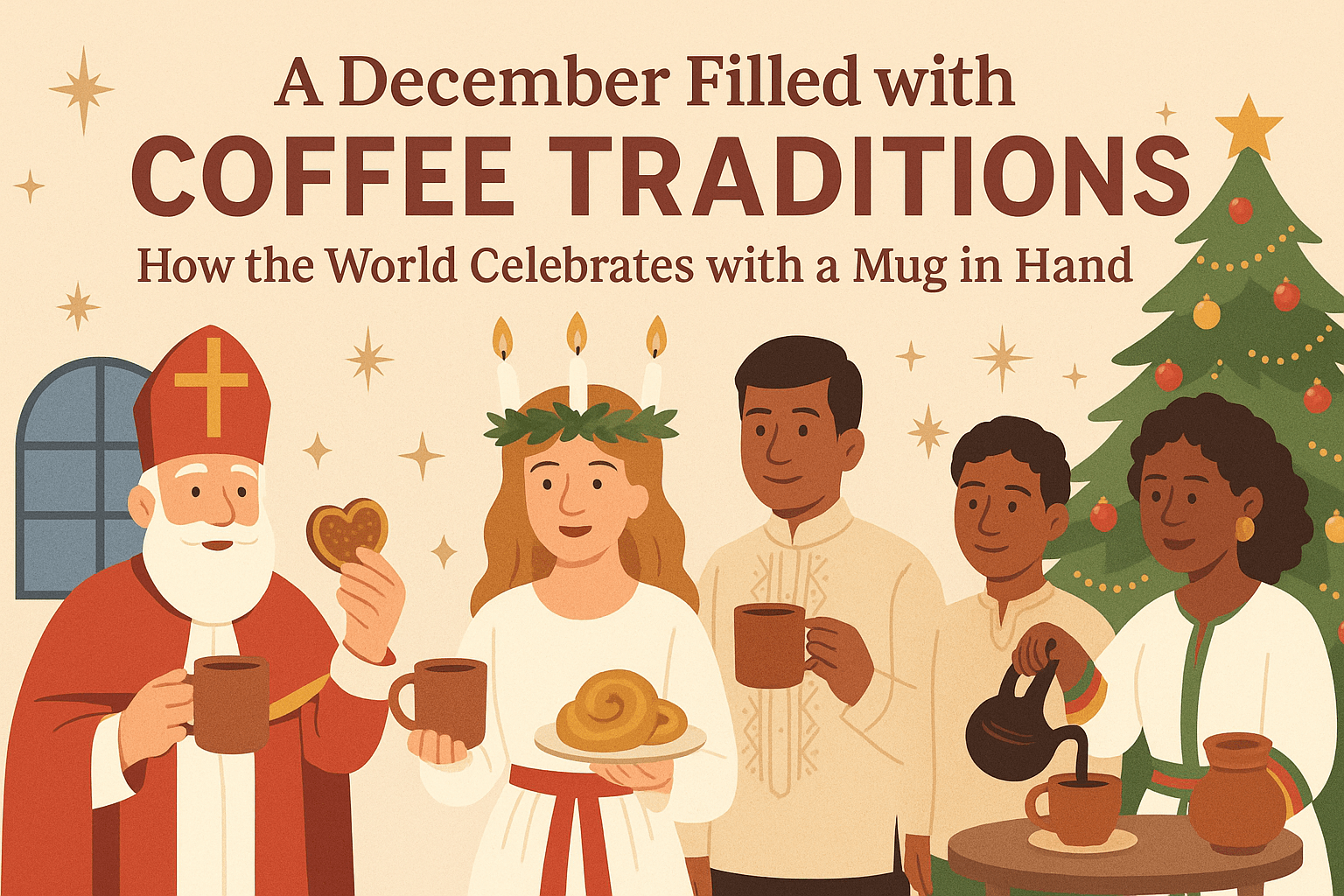
December 6: Saint Nicholas Day. A Sweet Beginning to the Season
In parts of Europe, December begins not with Christmas trees but with Saint Nicholas Day on December 6, a Christian feast celebrating the original bearer of gifts. Children wake to find small treats tucked into their shoes.
These treats often include cookies, fruit, sweet breads, and the famous gold-wrapped chocolate "coins" that originally symbolized a dowry for young women of poor families but later became a symbol of generosity and good fortune.
Throughout the Netherlands, Belgium, and nearby regions, families and churches mark the day with warm hospitality. Coffee is poured generously alongside speculaas, a crisp, spiced, brittle biscuit, and speculatius, a thin, delicately spiced shortcrust cookie. These treats are often in the shape of St. Nicholas, which gives the morning a traditional and festive feeling.
It is a simple and cozy ritual that blends coffee, cookies, excited children, and the earliest sparkle of the holiday season.
December 13: Saint Lucia’s Day. Candlelight, Faith, and Morning Coffee
A week later, northern Europe brightens again for Saint Lucia’s Day on December 13, celebrated throughout Sweden and Scandinavia. This Christian feast honors Saint Lucy and doubles as a festival of light in the long Scandinavian winter.
Communities often observe the day with church services and candlelit processions. A girl dressed as Lucia wears a white gown, a red sash, and a glowing crown of candles while leading soft, beautiful songs that feel like hope returning to the darkness.
At home, a treasured tradition unfolds in the early morning. The eldest daughter dresses as Lucia and brings coffee and lussekatter, golden saffron buns curled into an elegant S shape, to her family.
The aroma of fresh coffee, the warm glow of candles, and the bright yellow buns against the dim winter morning create a peaceful and meaningful beginning to the day.
Even beyond religious circles, many families embrace Lucia as an extra-special December coffee moment filled with light and comfort.
December 16 to 24: Simbang Gabi. Nine Dawn Coffees in the Philippines
In the Philippines, the holiday spirit rises well before the sun. Beginning on December 16 and continuing through December 24, communities gather for Simbang Gabi, a nine-day Catholic novena of pre-dawn Masses leading to Christmas.
Before four in the morning, lanterns glow softly, choirs sing, and families walk through the cool darkness toward the church.
When Mass ends, the courtyard transforms into a lively gathering place filled with the smells of bibingka (a traditional Filipino baked rice cake), puto bumbong (a traditional steamed rice cake made with purple rice), and freshly brewed coffee.
The combination of devotion, community, and warm comfort creates a uniquely Filipino holiday experience. It is a ritual of gratitude, joy, and connection.
December 16 to 24: Las Posadas in Mexico. Pilgrimage, Hospitality, and Shared Warmth
During the same December window as Simbang Gabi, Mexico celebrates its own nine-day tradition called Las Posadas, held from December 16 to 24.
This cherished religious and cultural observance reenacts Mary and Joseph’s search for lodging on their journey to Bethlehem. Each evening, neighbors join a candlelit procession called the pastores. Two children, dressed as Mary and Joseph, lead the way, often accompanied by an angel and other costumed participants.
As the procession moves from house to house, the group sings a traditional call-and-response song asking for shelter. Those inside reply with gentle refusal until finally opening their doors in welcome. This moment of hospitality symbolizes the warmth, generosity, and compassion that should have been extended to the Holy Family.
Once inside, the mood instantly shifts from solemn pilgrimage to joyful gathering. Homes fill with music, laughter, and the comforting aromas of holiday foods like tamales. Warm drinks are an essential part of the celebration.
Many hosts serve café de olla, coffee simmered in a clay pot with cinnamon sticks and piloncillo, a raw, unrefined cane sugar. The scent of cinnamon and caramelized sweetness fills the kitchen, creating a cozy, festive atmosphere. Café de olla appears not only at Las Posadas but also at Christmas dinners and simple evenings at home throughout the season.
The celebration traditionally ends with the breaking of a star-shaped piñata, a highlight for children and adults alike. With roots dating back to sixteenth-century colonial Mexico, the piñata once symbolized spiritual lessons. Its seven points represented the seven deadly sins, and breaking it was seen as conquering temptation. The candies and treats that spill out represent the blessings of heaven.
Las Posadas blends faith, food, community, and warm hospitality into nine beautiful nights that lead up to Christmas Eve.
For many families, it is one of the most heartfelt and meaningful traditions of the season.
All Season Long...Christmas Coffee Culture in Scandinavia, Ethiopia, and Mexico
Not every December coffee tradition belongs to a specific day. Some are simply woven into the rhythm of the season.
Across Scandinavia, December is filled with Advent fika, relaxed coffee gatherings that offer a cozy break from the cold.
Friends and family share saffron buns, ginger cookies, pastries, and warm conversation. These small, candlelit moments brighten the long winter nights.
.
In Ethiopia, families often prepare a gently spiced holiday coffee called Buna Tetu, which means “come drink coffee with me.” The invitation alone reflects the warmth of Ethiopian hospitality. Brewed with cinnamon and cloves, Buna Tetu fills homes with fragrance and opens the door for heartfelt conversation.
These cultural practices might not be marked on a calendar, but they carry the heart of the season.
December 24 and 25: Christmas. Coffee as Comfort and Companion
By the time Christmas Eve and Christmas Day arrive, coffee becomes a quiet thread woven through traditions everywhere.
For some families, Christmas Eve begins with a hot cup of coffee after returning from candlelit services. For others, Christmas morning truly starts only when the coffee maker hums to life and its aroma fills the house.
As mugs and gifts are passed around, wrapping paper rustles, children’s laughter fills the air, and conversations drift between cherished memories and hopeful new beginnings.
Throughout the day, fresh pots are brewed for arriving guests, while sleepy parents and relatives settle in for long, heartfelt visits with friends. And, in the center of it all, coffee provides warmth, comfort, and connection during the busiest days of the year.
January 7: Ethiopian Gena. A Ceremony of Blessing
The holiday season concludes in Ethiopia with Gena, the Ethiopian Christmas, celebrated on January 7. Here, coffee takes its most ceremonial form in the buna ceremony.
Green coffee beans are roasted over an open flame, releasing a fragrant smoke that fills the room. Guests lean in to inhale the aroma before the beans are ground and brewed in a clay pot called a jebena. The coffee is served in three rounds, each one symbolizing blessing, friendship, and connection.
It is not simply coffee. It is hospitality, reverence, and celebration poured slowly and thoughtfully into each cup.
What These Traditions Share:
From December 6 to January 7, from candlelit breakfasts to pre-dawn gatherings to spiced clay-pot brews, these traditions share a single message.
A mug can hold more than just a drink...
It can hold a welcome.
It can hold a culture's history.
It can hold a family tradition & connection
And it can hold a blessing.
So no matter where you are or which holiday traditions you celebrate, coffee has a way of turning December into a season that feels warmer, sweeter, and filled with meaningful connections that linger long after the cup is empty. ☕🎄🎁

0 Comments
Join the conversation
Be the first to comment
Share your thoughts above.